




Most cyclists pay close attention to their tyres and chain, but bicycle brakes rarely get the same care. They are adjusted once and then forgotten until something feels off. As a leading bicycle brakes manufacturer in India, Sprandom has worked closely with riders across all experience levels, and one thing stands out clearly: brake myths are widespread, and they quietly affect cycle safety every single day.
Here is what the facts actually say.
Why Riders Get Brake Advice Wrong
Cycling communities share a lot of tips, some useful, some outdated, and some simply incorrect. When that misinformation involves braking performance, it puts riders at real risk. The myths below are some of the most common ones Sprandom encounters, and correcting them can make a meaningful difference to how safely you ride.
Myth 1: New Bicycles Come with Perfectly Set Brakes
Reality: Factory brake settings are calibrated for general use, not for your specific weight, riding style, or terrain. Brake cables on a new bicycle are often slightly under-tensioned, and bicycle brake pads may not sit flush against the rim or rotor. Before your first serious ride, have the brakes professionally set or carefully adjusted at home. A few minutes of setup can prevent a lot of trouble on the road.
Myth 2: Brake Cables Do Not Need Any Maintenance
Reality: Brake cables run through housing that generates friction with every pull. Over time, without lubrication, the cable begins to stiffen, fray, or develop resistance points that make braking feel heavy and inconsistent. A light application of cable lubricant every few months keeps the system responsive. Waiting until a cable snaps means the maintenance was already overdue by a long stretch.
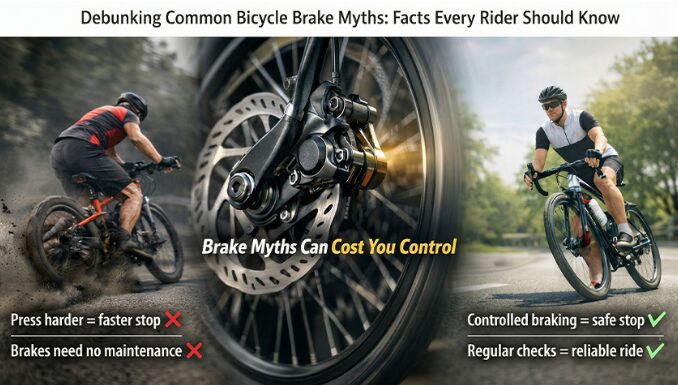
Myth 3: Pressing Harder Always Stops You Faster
Reality: Aggressive braking, particularly on the front brake alone, can cause the rear wheel to lift or send the rider forward. Effective braking is about applying steady, progressive pressure — rear brake first, followed by gradual front brake engagement. This distributes the stopping force correctly and keeps the bicycle stable. Braking performance improves with technique, not just force.
Myth 4: All Bicycle Brake Pads Work the Same Way
Reality: Brake pads are manufactured for specific rim materials, brake systems, and riding conditions. A rubber compound pad suitable for an alloy rim can damage a carbon surface. Organic disc pads and sintered disc pads behave very differently in wet weather. Using mismatched pads reduces stopping efficiency and can wear down wheel surfaces faster than expected. Always check compatibility before replacing pads.
Myth 5: Brakes Only Need Attention When They Feel Weak
Reality: Braking performance degrades gradually, which makes it easy to overlook. Worn pads, stretched cables, and slightly misaligned calipers all reduce stopping power before the problem becomes obvious. Riders who wait for a clear warning sign are often already compromising their cycle safety without realizing it. A quick inspection every four to six weeks, checking pad thickness, cable tension, and caliper alignment keeps everything within safe working range.
The Role of Quality Components
Maintenance habits matter, but so does what you are maintaining. Poorly manufactured brake components wear faster, perform inconsistently, and create more problems regardless of how well they are looked after. Sprandom, as a trusted bicycle brakes manufacturer in India, designs brake systems built specifically for Indian riding conditions – varied terrain, fluctuating weather, and demanding daily use, so that riders get consistent, reliable stopping power across the life of the product.
Conclusion: Better Knowledge Leads to Safer Riding
Correcting these myths is a practical step toward becoming a more informed cyclist. Inspect your brake cables regularly, replace bicycle brake pads before they wear thin, and take braking performance seriously at every stage of ownership. Choosing quality components from a reliable manufacturer makes that commitment easier to maintain. Every safe ride begins with brakes you can genuinely trust.