




A bike might seem to be a relatively simple machine, with only two wheels, a frame, and pedals. However, the technology involved in the development of bikes is the result of many years of engineering and testing.
From early wooden bikes to those used today for city riding, trail riding, or race competition, bicycle engineering has changed not only how we move, but also how we exercise and explore the world around us.
Such progress goes far beyond just increasing the speed of movement. The developments in terms of the material used for the frame, brake, wheels, drivetrain, and manufacturing process have made them useful for various riders and conditions.
A glimpse of the history of bicycles will aid you in making the right decisions about your equipment and safety while riding.
The Evolution of Bicycle Design
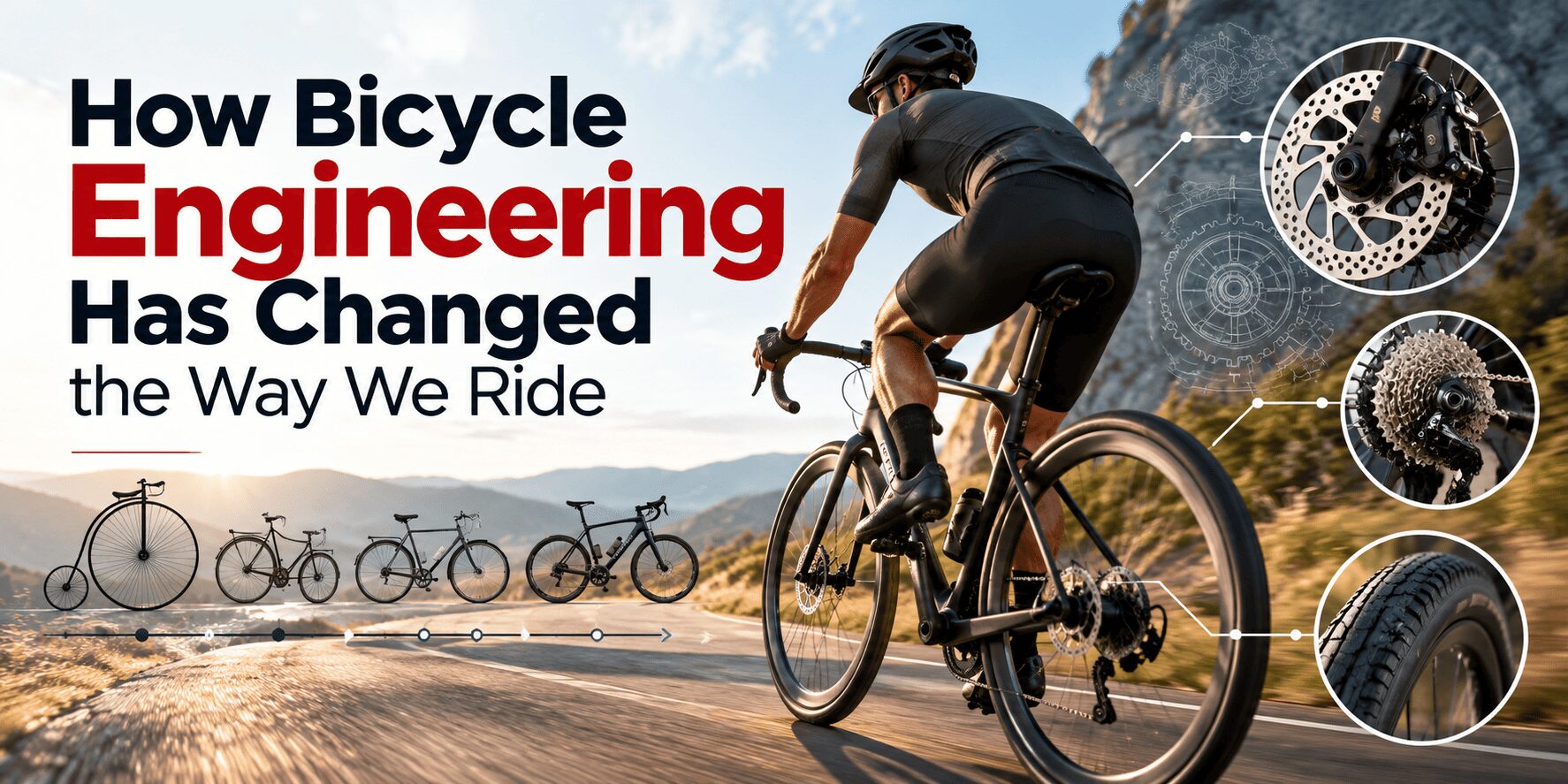
However, the first bicycles were not similar to the bicycles of today. For instance, some early bicycles had wooden frames, and high-wheel bicycles had one large front wheel that made mounting and riding difficult for many people.
However, the introduction of safety bicycles in the late nineteenth century was a significant milestone in the development of bicycles. The practical design of the frame, having two wheels of equal size and a chain-driven back wheel, laid the foundation of the modern bicycle design.
Design of tires, brakes, spokes, and handlebars was improved over time. Besides, companies began to produce bicycles meant for varied activities, e.g. road riding, mountain cycling, commuting and recreation.
There were various factors behind this trend, including speed, safety, comfort and durability. Readers interested in the historical development of bicycles can explore The Franklin Institute’s educational resource on bicycle technology.
Today, bicycle design continues to evolve as manufacturers respond to different road conditions, rider expectations, and advances in materials and manufacturing.
1. Lightweight and Stronger Bicycle Frame Materials
A bicycle frame is an integral part of a bike since it carries the rider, holds all the essential parts together, and even affects the overall weight, rigidity, and riding of a bicycle.
Steel was popular in bicycle frames due to its high rigidity, durability, and availability in traditional bikes. Even in modern bikes, steel makes up some good bicycles due to the fact that steel is very easy to repair and reusable.
Due to advancement in technologies of manufacture, aluminum alloys became very common in modern times. In addition, they offer some kind of compromise between weight, strength, and cost.
Also, composite materials, which are made of carbon fibers have provided new dimensions to designers. They are able to vary structure of carbon frame in order to obtain desired strength and flexibility of the frame at the expense of higher price.
Titanium is another frame material used for its resistance to corrosion and because it offers a great strength-to-weight ratio.
There is no one material which will work for all cyclists. There are a number of things manufacturers have to consider when picking materials.
It is evident that the evolution of frame materials demonstrates how engineering can boost the performance of the bicycle without affecting its design.
2. Better Bicycle Braking Systems for Greater Control
A bike should be able to stop safely and effectively whether it is being used for commuting, going downhill, or when there is a slippery road surface.
The early designs of brakes were rather simple, but through further advancements, better and more efficient brake systems have been developed.
Currently, the most common type of brakes used in bicycles include rim brakes or disc brakes. The rim brakes work by applying friction on the wheel rim, while the disc brakes employ the use of a rotor.
There are two types of disc brakes, namely mechanical and hydraulic. Mechanical disc brakes make use of cables to transmit force through the brake lever, while hydraulic disc brakes utilize fluid pressure to engage the braking process.
The various types have their strengths, weaknesses, and maintenance needs. The best choice will vary according to the design of the bicycle, riding conditions, intended use, and budget.
However, there are other factors that affect the braking capability of a bicycle, aside from the type of brake attached to it. These include the condition of the pads, rotor or rim, tire grip, road surface, and proper maintenance.
For a deeper explanation of these factors, read our guide to the science behind bicycle brake performance. It explores how friction, modulation, and braking technology influence control.
The key takeaway is simple: effective bicycle braking combines suitable engineering, correct installation, routine inspection, and responsible riding.
3. Wheel and Tyre Engineering Has Improved Ride Quality
Bicycle wheels must bear the weight of the rider and be in contact with the road. Therefore, the construction of bicycle wheels determines their durability, strength, maneuverability, and comfort.
Currently, great attention is paid to the design of the rim, hub, and spokes of bicycle wheels, as these components allow for both lightness and durability. Correct tension of the spokes allows the wheel to retain its shape when loaded.
The development of tyre technology has been significant as well. Different tread patterns, rubber compound, width, and casing construction can be chosen depending on the particular riding circumstances.
Smooth tyres are usually good for riding on pavement, whereas more pronounced tread patterns might be helpful for loose or rough ground. It all depends on the terrain.
Tyre pressure is yet another significant consideration. Under-inflation of tyres can lead to increased rolling resistance and potential pinch flats under specific circumstances. Over-inflation of tyres will reduce comfort and traction on poor road conditions.
One should not assume that high pressure is always good and should adhere to the instructions provided by the manufacturer of the bicycle and tyres and opt for a suitable pressure according to their requirements.
This way, cyclists can pick wheels and tyres that suit their needs.
4. Modern Gears and Drivetrains Make Cycling More Efficient
The drivetrain connects the power of pedalling from the cyclist to the rear wheel. Typically, this will consist of the pedals, crank, chainrings, chain, rear sprockets, and gearing components.
Historically, there were limited options for gearing on bicycles, making it more challenging to ride uphill and cycle efficiently.
Today, there is more versatility with the gear system. Low gears will make the uphill ride easy for the rider, whereas high gears will make the rider maintain the speed even on level surface whenever possible.
Derailleur gears involve a change in the gear ratio through moving the chain from one sprocket to the other. The internal gear hub is another choice in which gear system is installed in the rear wheel.
All these developments have greatly increased the flexibility of the bicycle. The commuters are able to adjust according to the different terrains, recreational riders are able to deal with long rides, and racing riders are able to adjust their gears according to their speed.
Drivetrain maintenance is equally crucial. It involves cleaning, adequate lubrication, and part replacements.
Good engineering makes the components work properly, but the right care will make sure that they continue to do so.
5. Bicycle Geometry Has Improved Comfort and Handling
Bicycle geometry is the shape or measurement of angles of the frame, wheels, and other parts of a bicycle.
Geometry affects a bike’s steering, stability, and how it handles differently in terms of speed.
A racer bike would need geometry that helps maintain the aerodynamic riding position. A commuter bike needs something else that can maintain an easy-to-manage position while handling, while a mountain bike should be built for difficult trails.
Other elements as well influence the degree of comfort. Construction of the saddle, shape of the handlebars, design of the grip and length of the bicycle frame may all influence the degree of comfort when riding the bicycle over long distances.
The ability of the bicycle to fit the rider increases its controllability and comfort. It becomes necessary for the person buying the bicycle to select the proper frame length and set up his position for riding.
Engineering of bicycles is not all about enhancing speed levels. It is as much about functionality and comfort.
6. Modern Manufacturing Has Improved Bicycle Component Quality
However, there is much more to bicycle engineering than designing individual components. The processes used in manufacturing affect the performance of the final product.
Computer-aided design assists engineers in developing and perfecting the shapes of components prior to production. Advanced manufacturing techniques can enhance the precision of manufacturing and use of materials.
The quality control process may involve dimensional inspection, inspection for manufacturing defects, wheel alignment measurement, and component testing according to specifications.
These will vary depending on the component, the process of manufacture, and the standards.
It is very important where several components need to interact. Inappropriate adjustment of the brakes, wheels, or inappropriate combination of components will impact how the bicycle performs.
Engineering needs to take into account proper choice of materials, proper design, proper manufacturing, and inspection.
This will help bicycle components manufacturers ensure that the components perform as required.
7. New Technology Is Expanding the Possibilities of Cycling
The modern bicycle is now becoming a blend of mechanical components and electronics.
An electric bike incorporates a motor and battery which offer the rider support as he pedals. This may help in making some trips easier.
There is also the advancement in the form of electronic gear shifters. Unlike mechanical gear shifters, these involve electronic control of the gear changing process.
The bicycle may also come with sensors, display screens, navigational aids, and applications. This makes it possible for the cyclist to monitor distance, assess performance, and chart routes.
Nevertheless, such advanced technology is not always a necessity for all cyclists. A well-tuned traditional bicycle would serve the cyclist well.
The best kind of innovation is the one that addresses an actual challenge that the cyclist faces without adding any unnecessary complication.
8. Why Bicycle Maintenance Still Matters
The most well-made bicycle is subject to wear. The tyres, chains, brakes, wheels, and other parts may be affected by friction, weather conditions, road debris, and even use.
Regular checks allow cyclists to detect any issues that may arise in the future.
Here are some basic checks worth incorporating into a regular maintenance routine:
- Inspect the brakes: Check the lever feel, pad or rotor condition, and signs of damage or poor adjustment.
- Check the tyres: Look for cuts, embedded debris, unusual wear, and appropriate inflation.
- Examine the chain: Clean and lubricate it according to the manufacturer’s recommendations.
- Check the wheels: Look for visible damage, unusual movement, or rubbing.
- Test the bicycle before riding: Pay attention to unexpected noises, loose parts, or changes in handling.
If a brake is not working correctly or a component appears damaged, have the bicycle inspected by a qualified mechanic before continuing to ride.
For further guidance on preparing a bicycle for use, the National Highway Traffic Safety Administration’s bicycle safety guide covers bicycle readiness, helmet fit, visibility, and responsible riding practices.
Maintenance helps preserve the reliability and performance that good engineering is intended to deliver.
What Does the Future Hold for Bicycle Engineering?
As the demand from different areas of transportation changes and evolves, so does the process of bicycle development in response.
The future developments may range from better frame design, better integration of electrical systems and improved production process, to environmentally friendly choice of materials.
In addition, there will likely be more developments geared at creating a more convenient vehicle in regards to maintenance and use for daily transportation.
While all of this is going on, existing engineering principles will still be necessary. The bicycle needs to hold up its rider, pedal effectively, turn predictably, and brake effectively.
Bicycles in the future are likely to involve a combination of technology and engineering principles that have worked for years.
Final Thoughts
Changes in bicycles as an engineering product have come about due to advancements in materials, brake system, wheel design, gearing system, design and production techniques.
This has ensured that bikes have the capacity to serve all types of cyclists and riding purposes. Nonetheless, having technology does not mean that biking is easy and enjoyable. Just as important as the technology is equipment selection, equipment maintenance and the right riding technique.
Be it working pedaling or weekend exercising or mountain biking or competitive biking, understanding how the bike works comes in handy.
Indeed, the history of bicycle engineering is not all about trying to develop a faster bike. It is about making cycling more convenient, more comfortable, efficient, and reliable for those who use it.