




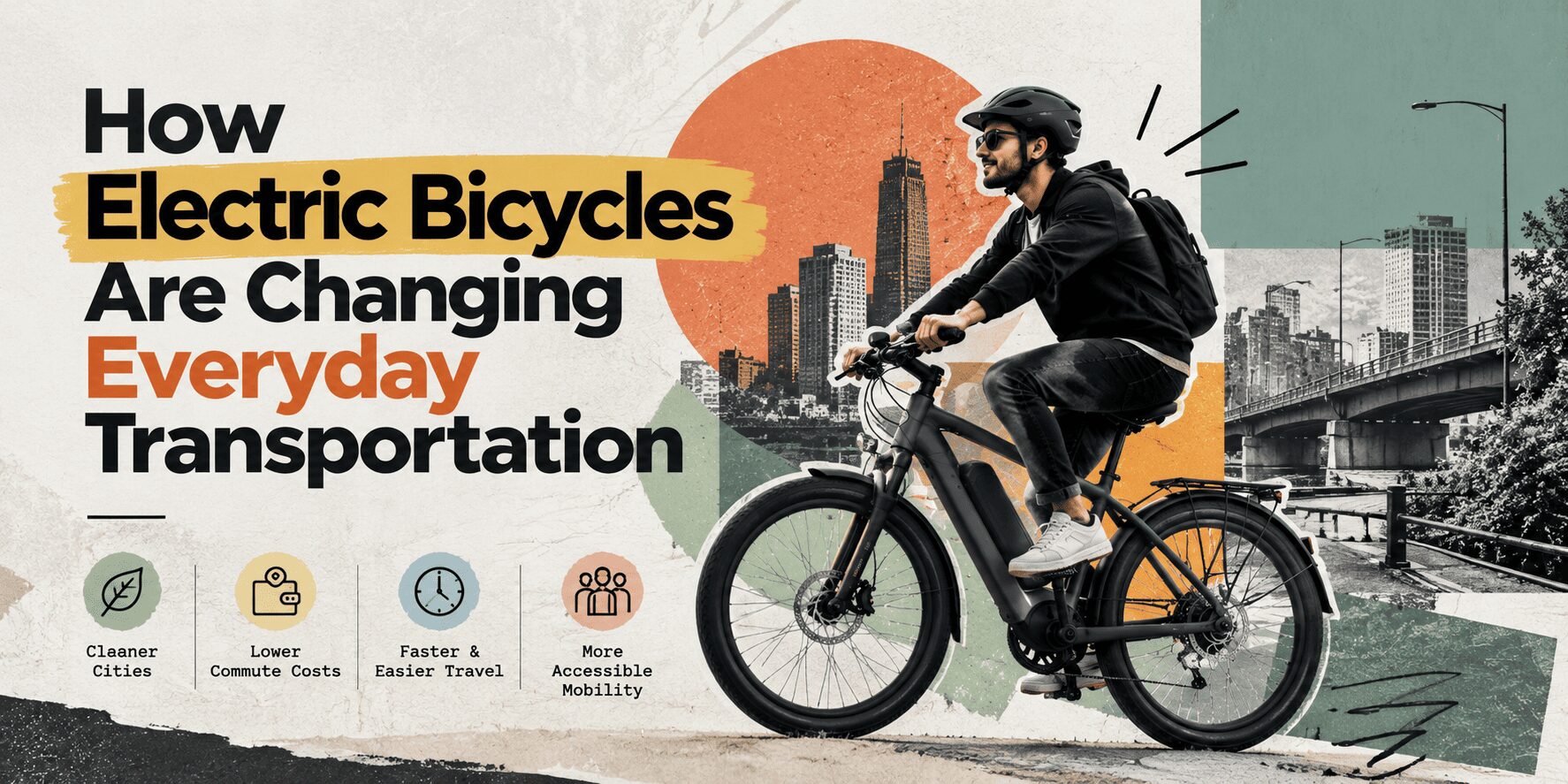
How we move from place to place is being transformed due to urban congestion and the need by commuters for practical and eco-friendly ways of getting around town. The electric bicycle (e-bike) is becoming a popular mode of transport in the place of some car and motorcycle trips.
Electric bicycles incorporate the basic design of a bicycle along with a built-in electric motor and battery pack depending on their make and model and help riders with pedal assistance for hilly terrain, distance, and commuting.
Whether it’s commuting to work or doing chores close to home, there are many ways that electric bicycles will change our everyday transit experiences. Let’s discover more about this form of transportation and what factors we must take into account when buying an electric bike.
What Is an Electric Bicycle and How Does It Work?
Electric bicycle relies on motor for assistance, usually getting its power from a battery. Pedal-assistance powered e-bikes turn the engine on when a rider pedals, but there are bikes with both pedal and a throttle option.
Parts of an average e-bike consist of a bike frame, battery, engine, control unit, drive, wheels, and brakes. Some e-bikes also have display screens.
The level of assistance is determined by a number of factors such as bike design, battery power level, the terrain, rider’s weight, and the selected power level.
For more background, the UK Department for Transport’s research on electric bicycles explores their use, benefits, and barriers to adoption.
1. Making Daily Commuting More Convenient
One of the advantages of using an e-bike is the possibility to simplify commuting to destinations by making the process faster.
Short trips within big cities may be boring due to traffic, a lack of parking space, and constant stops. E-bikes provide an additional option of transportation to offices, universities, shops, and other places located nearby.
Using an auxiliary engine will reduce the effort required and allow some commuters to reach the destination being less exhausted than on a traditional bike.
But still, an electric bicycle cannot be always considered as the fastest means of transport in all situations as traffic, weather, road quality, infrastructure, and length of route matter.
So, an e-bike can be a good replacement for traditional bikes for people with proper distances to cover.
2. Reducing Dependence on Fuel-Powered Vehicles
Many trips in our daily lives take place as a result of traveling short distances for purposes like shopping, working, and visiting other places of service.
Transition from fuel powered trip to the electric bike trip may be helpful in saving fuel and reducing emissions resulting from this trip.
It can also be helpful in some cases in reducing the problem of noise as well as of parking spaces.
The environmental efficiency of this strategy will depend on the nature of the trips which are substituted by electric bike trips.
The Global Environment Facility’s feature on electric bicycles in rural India illustrates how electric bicycles can support mobility and livelihood opportunities.
Electric bicycles do not solve all transportation problems, but they could be quite helpful when there is a need for such transportation.
3. Making Cycling Accessible to More People
Classic cycling may prove to be challenging for those who have to travel long distances, tackle inclines, or limit physical efforts.
Electric assistance could help in making some trips easier. It could encourage people who would otherwise not cycle due to hills, fatigue, or distances between home and work.
Pedal-assisted bikes will still require physical effort, but it will depend on the level of support and the conditions of the ride.
Electric cargo bikes will also assist people in transporting groceries, work equipment, and other appropriate loads without using a motor vehicle for all local trips.
The main advantage is versatility. People can pick the right level of support depending on their preferences and needs.
4. Offering a Different Approach to Transportation Costs
Daily travel expenses include costs of fuel, parking, public transportation fares, and vehicle servicing. The costs associated with electric bicycles are different because they operate using rechargeable batteries and not gasoline or diesel.
The cost elements that come with running them can include electricity charges, tire changes, brake service, drivetrain maintenance, battery maintenance, and repairs.
An electric bike might be able to save you money when it comes to your daily travels if you make many short trips. The overall cost savings will be based on the cost of purchasing the bike, battery life, maintenance needs, and usage frequency.
It is important to evaluate all these aspects before purchasing an electric bike. In case you do not need motor assistance in your travels, then a regular bike could be cheaper.
5. Supporting More Sustainable Urban Mobility
There are various concerns that are faced by the expanding urban centers in relation to traffic, air pollution, road space, and energy use. In this regard, the use of electric bicycles contributes to sustainable transport when they are used to substitute trips that would normally be undertaken through the use of higher emitting motorized vehicles.
The small size of the vehicle also makes it easier to park compared to most cars.
In any case, even electric bicycles have their own impact on the environment. This is because there is battery production, production of electricity, mining of raw materials, and replacement of components among others.
The other factor of significance is the infrastructure.
The Institute for Transportation and Development Policy’s report on e-bikes and compact cycling cities explores how electric bicycles can support urban mobility.
In combination with proper infrastructure and planning, the use of electric bikes can make them a good addition to the urban transport system.
6. Making Hills and Longer Journeys More Manageable
Mountains, headwinds, and long distances may make traditional cycling physically challenging. An electric bike could minimize the amount of physical effort needed for these types of terrain.
The motor assists the pedalling on the uphill routes. During longer commuting rides, the settings can allow a rider to compromise between his effort and battery usage.
Depending on how efficient the motor is, what kind of terrain is used, how much a rider weighs, the speed and other factors, the distance on which one will be able to ride using only the power from batteries varies.
It would be best if the riders planned their routes leaving some margin of battery life and followed the instructions provided by the manufacturer regarding battery usage.
Knowing these constraints allows people to select an electric bike which would suit their routes.
7. Why Braking and Safety Matter on Electric Bicycles
An electric bike could vary from a traditional bicycle in terms of weight, speed, and maneuvering. Therefore, it becomes even more necessary for an individual to have a suitable braking system and conduct regular maintenance.
Stopping distance of the bike depends on many different variables like speed, reaction time, grip of the tire, road condition, weather condition, and condition of the brake system.
It is necessary for one to check the brakes and other safety components of the bike on a regular basis.
Learn more about the science behind bicycle brake performance to understand how friction, adjustment, and component condition influence braking.
Responsible riding matters just as much as equipment. Wear a correctly fitted helmet, remain visible to other road users, follow local traffic regulations, and adjust your speed to the conditions.
The National Highway Traffic Safety Administration’s bicycle safety guidance provides further educational information on visibility, helmet use, and preparing a bicycle for a ride.
8. Creating Opportunities for Local Deliveries
The electric bicycles have also been considered for deliveries. Restaurant, grocery store, and local shop owners or small business owners may use the electric bicycles to make relevant deliveries.
Electric cargo bicycles will be able to carry relevant cargo and minimize the dependence on fuel-driven vehicles for some of their deliveries. The compact size may also be helpful where parking is an issue.
There are several things that need to be taken into account by the businesses before they decide to use the electric bicycles.
They may not be appropriate for all deliveries, particularly those involving large cargoes and long journeys.
9. Challenges to Consider Before Buying an Electric Bicycle
Despite their benefits, electric bicycles have limitations that buyers should understand.
- Cost: There are motors, batteries, and electronics that result in increased costs of e-bikes than ordinary bikes.
- Battery capacity: This varies depending on the type of bike, path, weather, rider, and amount of assistance.
- Charge and store: The rider should have the ability to make provisions for the charging of the bike and be aware of the battery safety tips provided by the manufacturer.
- Maintenance: Some components of the bike require specialized maintenance in addition to bike maintenance.
- Infrastructure: There could be dangerous road conditions and inadequate cycling infrastructure.
- Legislation: There are speed limits, bike requirement, among others that vary depending on where one is located.
Considering these factors helps riders determine whether an electric bicycle is a suitable investment for their transportation needs.
What Does the Future Hold for Electric Bicycles?
The development of e-bike technology can be facilitated by the progress in battery, motor, electronic, and manufacturing technologies.
Further progress in this area will make the use of e-bikes even more practical in terms of commuting, deliveries, and other types of travel. Better repair ability, availability of parts, and charging will also make the ownership of such bikes more enjoyable.
However, the use of e-bikes depends on more than just the progress in technology. Price, safety of biking, maintenance, and legal issues will influence the use of e-bikes.
The combination of technological progress and safe roads may make biking more convenient.
Final Thoughts
Electric bikes are set to change the way we travel around thanks to their convenience to use for many different riders and journeys. E-bikes will help commuters to ascend up slopes, cover greater distances, carry suitable load, and reduce dependency on fuel-based transportation modes.
The worth of the e-bikes depends on the travel needs of people, purchase costs, battery range, maintenance, road conditions, and laws.
With correct equipment, safe cycling practice, and better cycling infrastructure, electric bikes can be a practical means of transportation.