




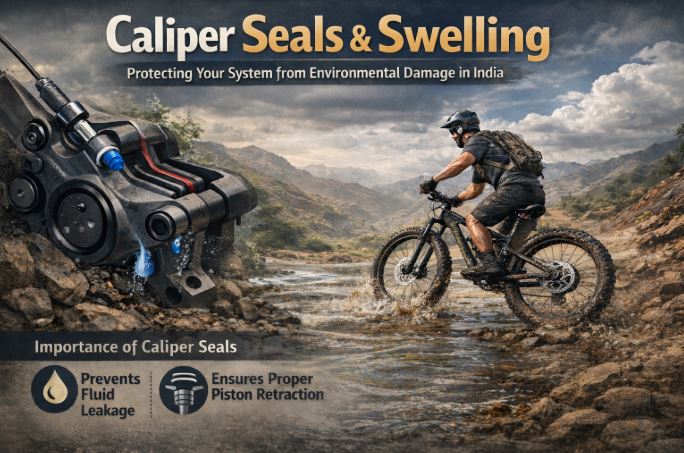
In bicycle braking systems, caliper piston seals are the small but mighty parts that keep everything working safely. They sit inside the brake caliper and stop fluid from leaking out. For any bicycle brakes manufacturer in India, keeping these seals healthy is not just about the part itself, it’s about keeping riders safe on all kinds of Indian roads.
1. Understanding Caliper Piston Seals in Bicycle Brake Systems
Caliper piston seals do two important jobs inside bicycle brake components:
- They stop hydraulic fluid from leaking out of the caliper
- They push the pistons back after you release the brake, so the pads don’t stay pressed against the rotor
When these seals stop working, the whole brake system becomes unreliable. You get weak stopping power, a spongy brake lever feel, and serious safety risks.
2. Elastomer Materials: The Foundation of Seal Performance
Hydraulic brake caliper seals are made from special rubber-like materials called elastomers. Two common types are:
- EPDM — Works well with heat, water, and mineral oil-based fluids. Great for many modern hydraulic brake systems
- NBR (Nitrile Butadiene Rubber) — Works best with DOT brake fluids and holds its shape well under pressure
Choosing the right material is very important. If you use the wrong brake fluid with the wrong seal material, the seal can swell up, soften, or break down completely and that’s dangerous.
3. The Dangerous Chemistry of Fluid Incompatibility
This is one of the biggest mistakes riders and mechanics make mixing DOT fluid with mineral oil, or the other way around.
Here’s why it’s so harmful:
- DOT fluids are designed for NBR-type seals
- Mineral oils need EPDM-type seals
- When the wrong fluid touches the wrong seal, the seal absorbs it and swells up
A swollen seal loses its perfect fit inside the caliper. It may get stuck, stopping the piston from coming back properly. Or it softens too much and lets fluid leak past it reducing brake pressure. Over time, the seal cracks and fails completely, causing brake fluid leakage.
4. Environmental Challenges in Indian Operating Conditions
India’s weather and roads are tough on bicycle brake components:
- Monsoon rains bring water and moisture into seal grooves, causing damage over time
- Hot summers speed up rubber aging and wear
- Humidity causes rust on metal parts that touch the seals
- Dust and mud get into the caliper and scratch the surfaces around the seals, creating leak paths
- Road chemicals and agricultural runoff add extra stress to the whole caliper assembly
- Poor storage in hot warehouses can damage unused seals even before they are installed
5. Recognizing Seal Failure Symptoms
How do you know if your caliper seals are going bad? Watch out for these signs:
- Sticky pistons that don’t pull back smoothly after braking
- Pads staying partially pressed against the rotor even when you’re not braking
- Weak or inconsistent braking — the bike doesn’t stop as well as it used to
- Fluid leaking around the piston edges — this is a serious warning sign that needs immediate attention
6. Maintenance Best Practices for Seal Longevity
Taking care of your seals is simple if you follow these rules:
- Never mix brake fluid types — always check the manufacturer’s recommendation before adding or changing fluid
- Inspect regularly — look for fluid leaks, check fluid levels, and examine the caliper for any damage
- Use only approved cleaners — avoid petroleum-based cleaners on EPDM seals, as they can cause damage
- Replace all seals when rebuilding — even if old seals look fine, always put in new ones
- Store spare seals properly — keep them in sealed, cool places to preserve their elasticity
S.K. Aggarwal & Co., a quality-focused Bicycle Brakes manufacturer in India, follows all these principles in their products. Because India’s riding conditions are tough, their brake components are built and tested to deliver reliable, safe performance whether you’re riding through monsoon puddles, dusty village roads, or steep mountain paths.